_(1)_(1)_1776400767722.02526372.png&w=256&q=75)
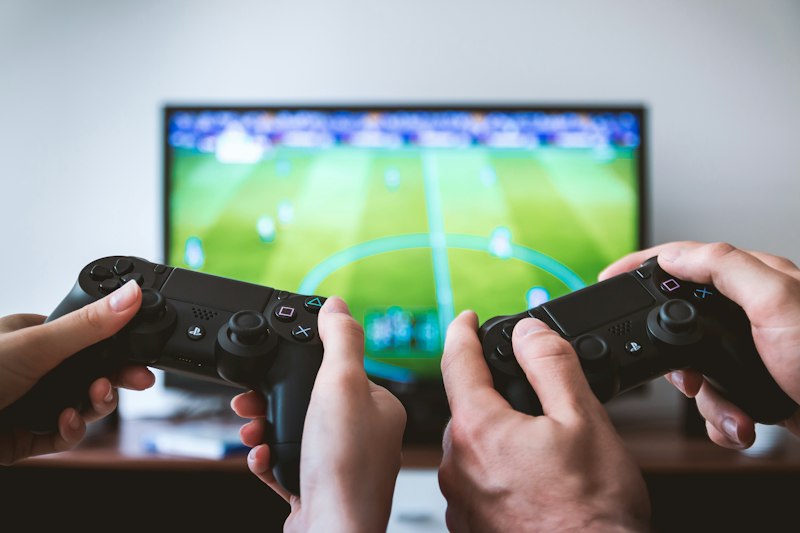
Ask almost any kid in Winnipeg what game they play, and there's a good chance the answer involves Minecraft or some kind of game design. These aren't just entertainment — they're some of the most powerful learning tools we've ever seen, and at Skill Samurai, we use them intentionally.
Why Games Work So Well
Traditional coding education often starts with abstract concepts: variables, loops, conditionals. For a 7-year-old, that's meaningless. But when you explain that a variable is how you store a game character's health points, or that a loop is what makes Minecraft repeat a building pattern — suddenly it clicks.
Games provide immediate, meaningful feedback. When a child writes their first script and their game character actually does what they told it to do, the connection between code and outcome is instant and visceral. That's the hook that keeps them coming back.
What Kids Actually Learn
In our game design modules, students work with Lua — a real programming language used professionally in game development. They learn:
- **Variables and data types** — storing and manipulating information
- **Conditionals (if/then)** — making their game respond to player actions
- **Loops** — repeating actions efficiently instead of writing the same code over and over
- **Functions** — organizing code into reusable blocks
- **Debugging** — finding and fixing errors methodically
These aren't watered-down concepts. These are the same fundamentals taught in first-year university computer science courses. The difference is the context makes them accessible to a 9-year-old.
Minecraft Education Edition
Minecraft Education Edition takes things even further. Students can program in-game agents using block-based code (similar to Scratch) or text-based Python. We use it to teach geometry, architecture, logic, and even environmental science — all through building and programming in a world kids already love.
The Bridge to "Real" Coding
The goal isn't to keep kids in games forever. Games are the on-ramp. Once a student understands loops and variables through game design, transitioning those concepts to Python or JavaScript is dramatically easier. The abstract becomes concrete because they've already seen it work.
Many of our students who started with game scripting at age 8 or 9 are now building web apps and Python projects by age 12 or 13. The foundation the games laid made everything after it faster.
Parents: Don't Worry About Screen Time
Not all screen time is equal. A child passively watching YouTube is different from a child actively writing code, testing it, finding the bug, fixing it, and watching it run. The latter is engaged, creative, and problem-solving. That's exactly what we build on.